
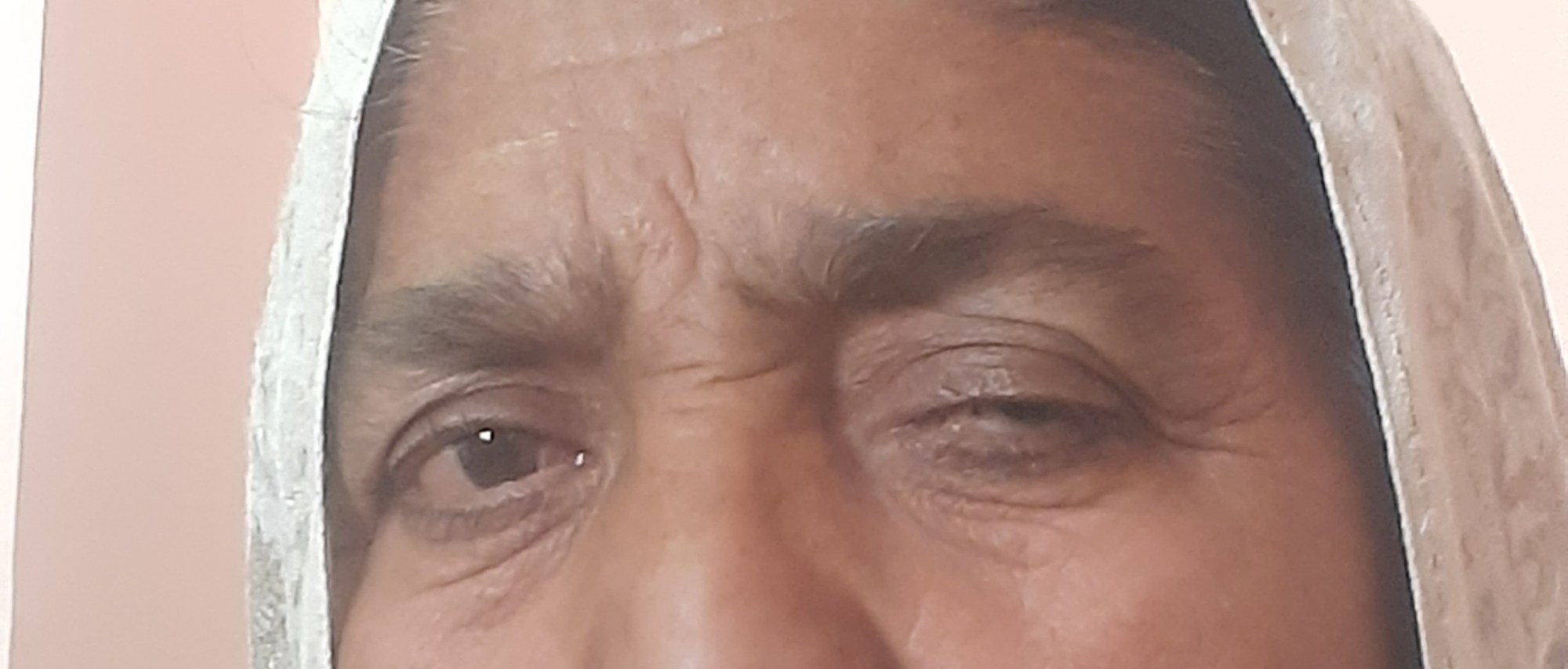
Diabetic isolated third nerve palsy with ptosis(drooping eyelid)
Introduction, signs and symptoms, workup, management, prognosis
By: Dr. Farhat Naz (Consultant physician)
Introduction:
Occulomotor (third cranial) nerve palsy is one of common complications of Diabetes. The patient with long history of diabetes are at risk of getting the paralysis of third nerve.
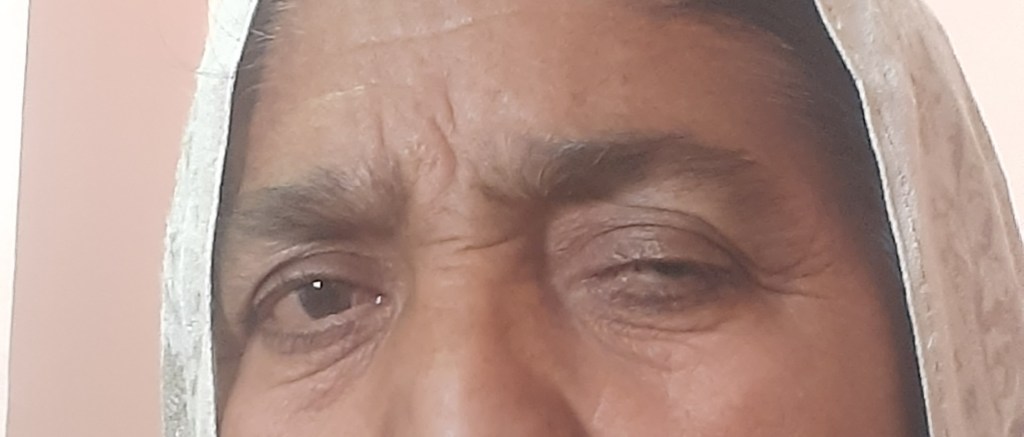
Our patient a female, 56 years of age, with 8 years history of Diabetes, presented in Ophthalmology Outpatient Department with 4 days history sudden drooping of left eyelid. After evaluation by Ophthalmologist she was referred to physician for Diabetes control and further workup.
What is third cranial nerve and how it functions?
The third cranial nerve is also called the oculomotor nerve. It mainly supplies the muscles that control the movements of the eye ball. It also causes constriction of the pupil. It is mainly formed by two types of fibers, outer and inner.
- Outer parasympathetic fibers supply the ciliary muscles and the sphincter pupillae. Sphincter pupillae will constrict pupil while ciliary muscle will cause accommodation.
- Inner somatic fibers supply the levator palpebrae superioris in the eyelid. This muscle retracts the upper eyelid. They also supply the four extraocular muscles: superior, middle, inferior recti, and inferior oblique.
What are the causes of third nerve palsy?
Third nerve palsy is either congenital or acquired. The acquired causes may range from benign palsy to serious underlying diseases.
Third-Nerve Palsy (TNP) Causes:
- Vascular ischemia
- Trauma
- Intracranial neoplasm
- Hemorrhage
- Congenital
- Idiopathic
Diabetes mellitus and hypertension cause vascular ischemia and present as the most benign causes of third nerve palsy.
What are symptoms of third nerve palsy?
The patients will usually present with drooping of the eyelid(ptosis) and double vision( diplopia). Diplopia sometimes remains unnoticed due to drooping of eyelid. It may be associated with headache and other symptoms depending on the underlying cause.
What are the examination findings in third nerve palsy?
The following examination findings will be present.
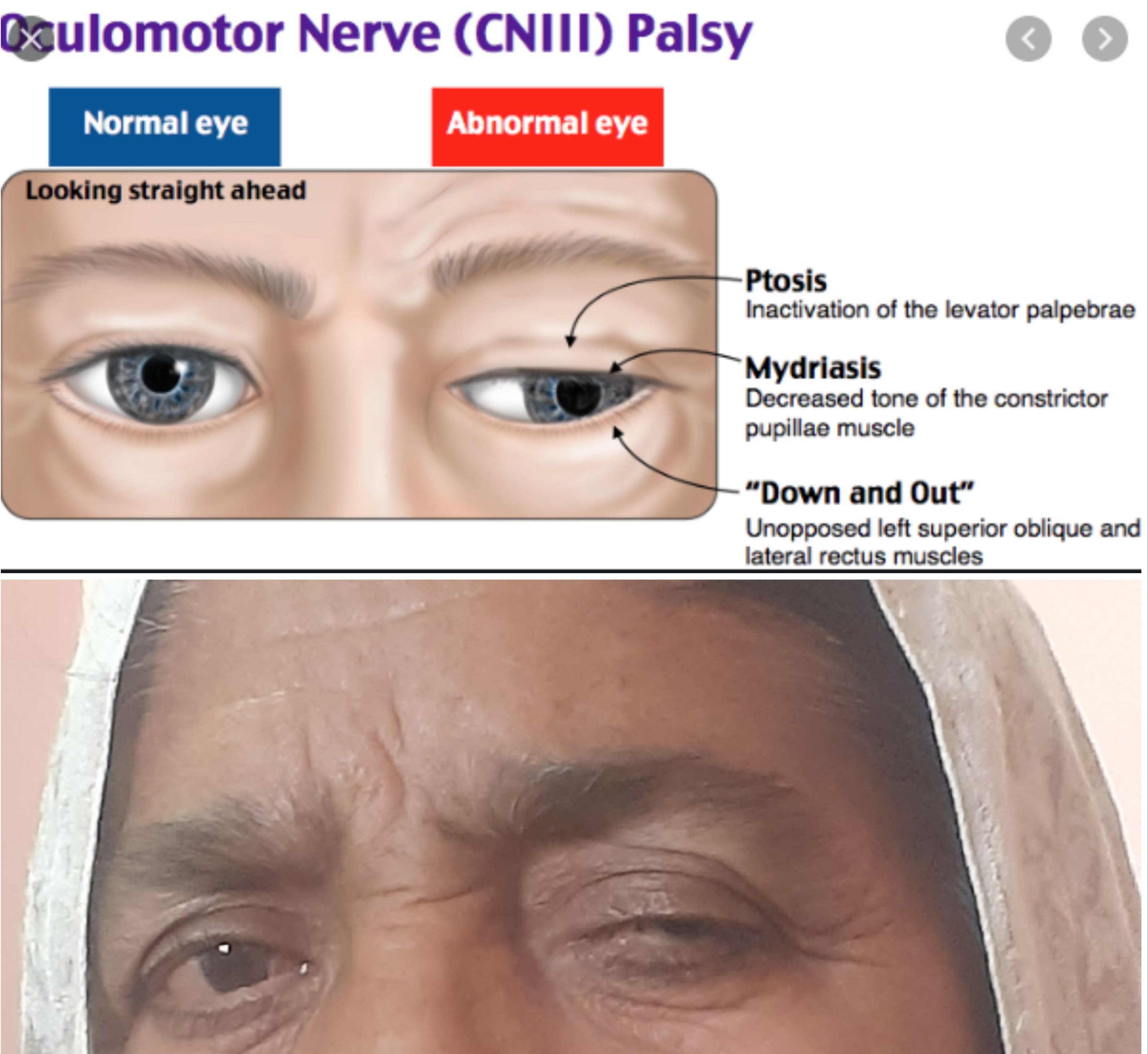
- Ptosis (drooping of eyelid)
- Diplopia (double vision) while examining the eye movements.
- Deviation of the eye ball downwards and outwards. This is due to unopposed action of superior oblique and lateral rectus muscles.
- Pupil: The examination of pupil is very important to differentiate between ischemic and compressive lesions. Pupil is typically spared in ischemic causes of third nerve palsy like Diabetes and hypertension. Similarly accommodation is also preserved in ischemic lesions. Compressive lesions will cause fixed dilated pupil and loss of accommodation.
What investigations should be done for third nerve palsy?
In case of pupil sparing third nerve palsy, vascular causes should be investigated including
BP monitoring
Blood glucose/ HbA1c
Complete blood count
ESR
In patient with pupil involvement urgent evaluation is needed and imaging in mandatory. MRI is preferred to CT scan for evaluation of third nerve.
If an aneurysm is suspected then an angiogram should be done to locate the size and site of lesion.
Is MRI needed in all patients with third nerve palsy?
MRI is a costly investigation and 90% MRI’s done for third nerve palsy are normal. Therefore, as a general rule, if the pupil is spared, there is no need to rush for MRI. Conservative treatment should be offered. In the case of our patient, strict control of blood glucose is advised. Controlling hypertension is also recommended. Follow-up should occur at 3 months. Most of the palsies will improve in this time. If no improvement then imaging should be done.
MRI is mandatory in all patients with complete palsy and involvement of pupil.
What should be the management approach in third nerve palsy?
Management is conservative in pupil sparing third nerve palsy and patients will show gradual improvement over 3-6 months. Strict control of diabetes and hypertension is required.
In case of complete palsy with pupil involvement the underlying cause should be treated. Neuro surgical intervention should be done in case of aneurysms.
What is the role of surgery in third nerve palsy?
Surgery is often needed to correct alignment of the eye and improve cosmetic disfigurement.
What is prognosis of diabetic third nerve palsy?
prognosis in most of the diabetic patients with third nerve palsy is good. The patients will show improvement in one month and will show complete recovery within 3-6 months.
What other conditions can mimic third nerve palsy?
Third nerve palsy is not difficult to diagnose but the following conditions can mimic this condition:
- Ophthalmoplegic migraine
- InInternuclear ophthalmoplegia
- Anisocoria
- Other causes of ptosis
- Myasthenia gravis
- Thyroid eye disease https://youtu.be/WCb05cGgUB0
Who should treat and care diabetic third nerve palsy?
physicians, neuro physicians and ophthalmologists should work together to manage third nerve palsy.. ://www Https/Modi P, Arsiwalla T. Cranial Nerve III Palsy. [Updated 2022 Jul 4]. In: StatPearls [Internet]. Treasure Island (FL): StatPearls Publishing; 2022 Jan-.
 healthinfo